⊘
No account, no server, no tracking
No login screen, no hosted service, no analytics script and no remote listening history. Your books stay with you.
vbreader plays the audiobooks you already own: files in a folder on your phone. It remembers exactly where you stopped in each recording, and it puts that book back in front of you when you start the car, without you touching the screen. No account, no subscription, and nothing sent to us.
No account, no sign-up, nothing sent to us. Your local library works offline, and cloud or server sources coming after launch will still be yours, not something we run.
“When I start my car, my book is already playing from exactly where I stopped, and I never touched my phone.”
This is the promise the whole app is built around.The first install is deliberately local-first: add a folder, see your library, press play and resume later from the exact place you stopped. No account turns a simple listen into a project.
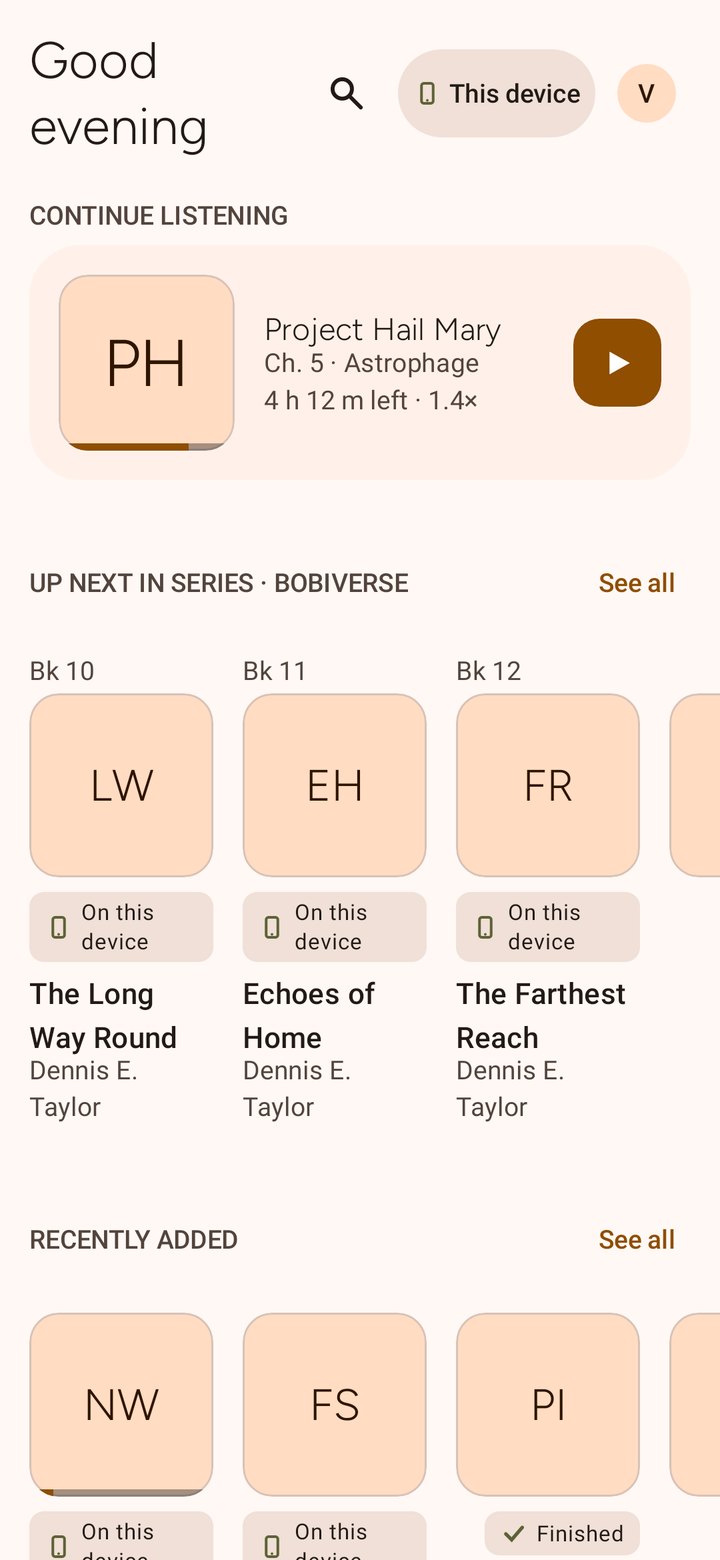
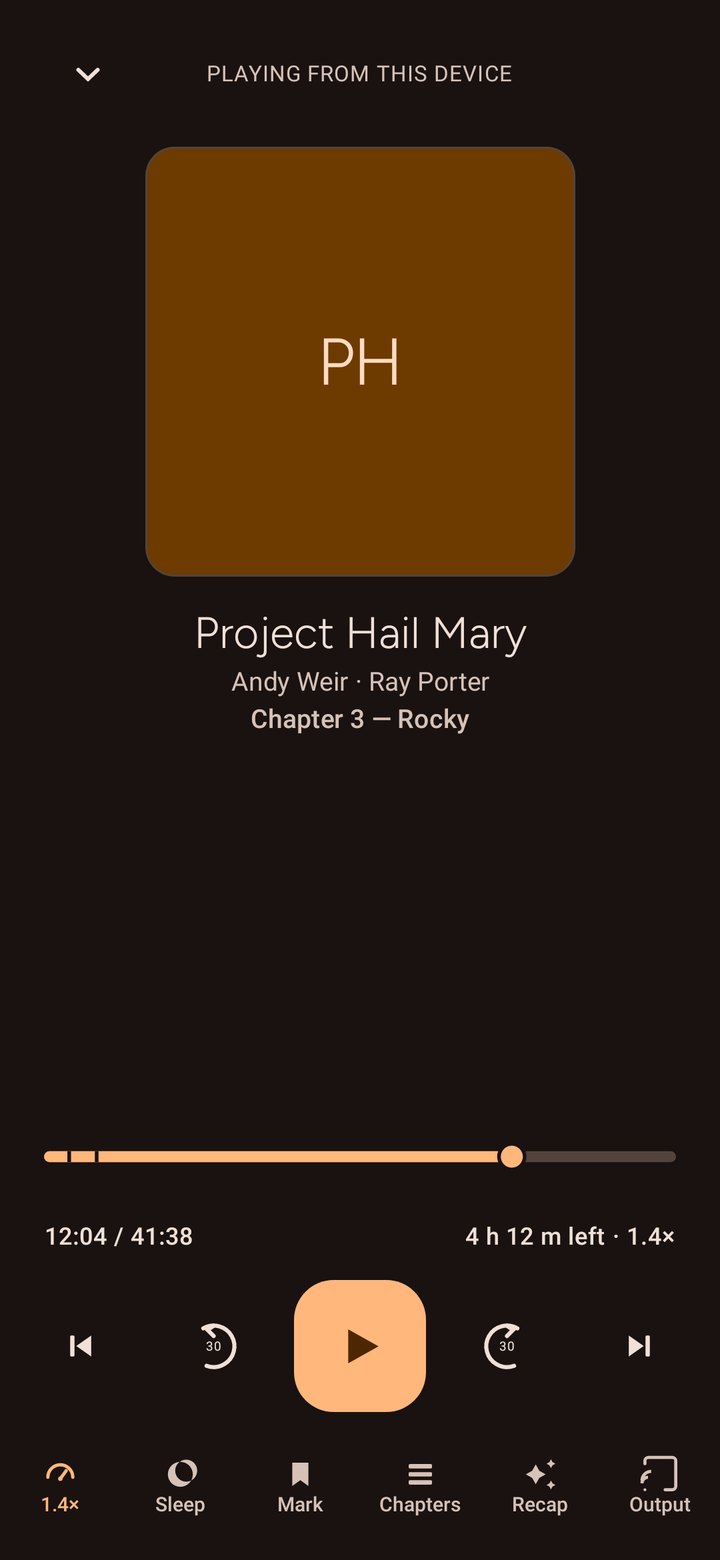
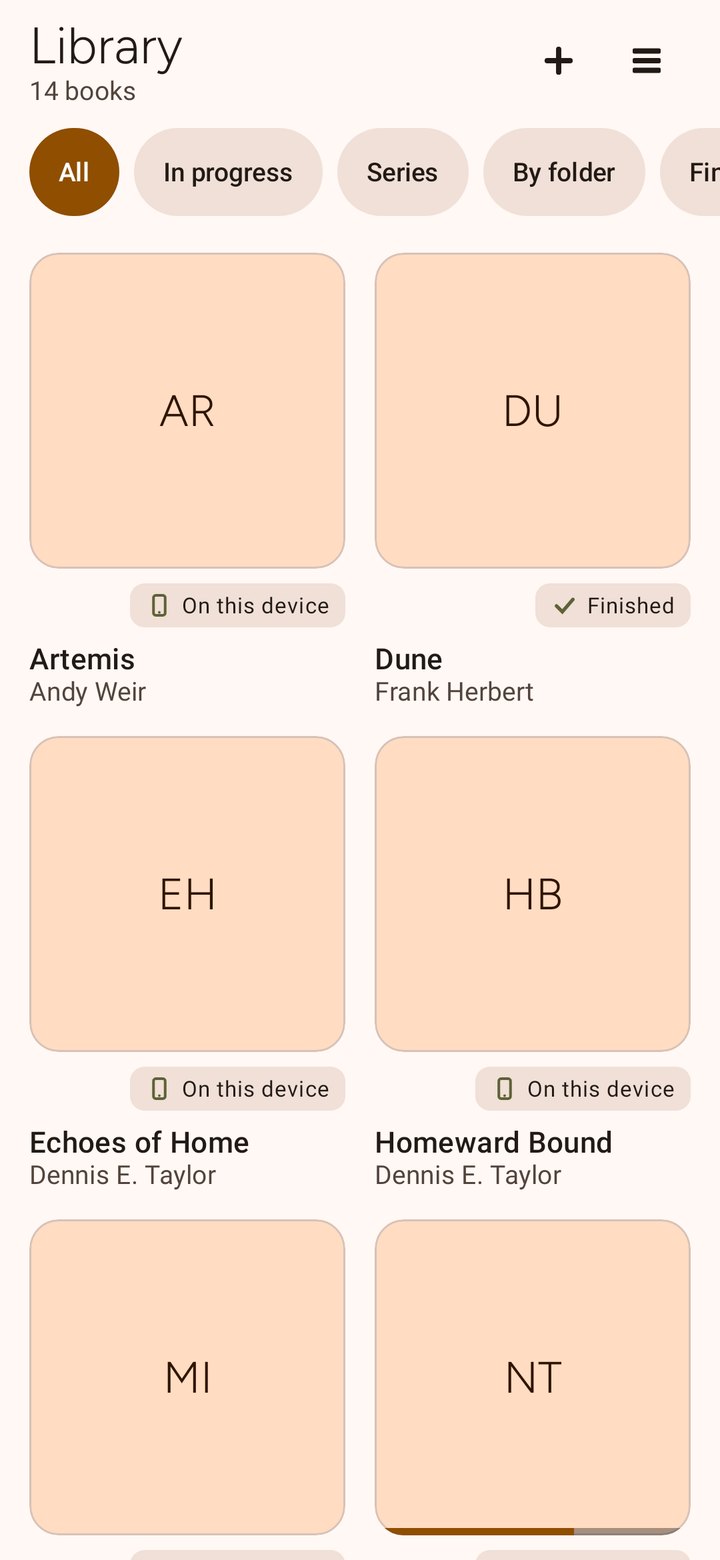
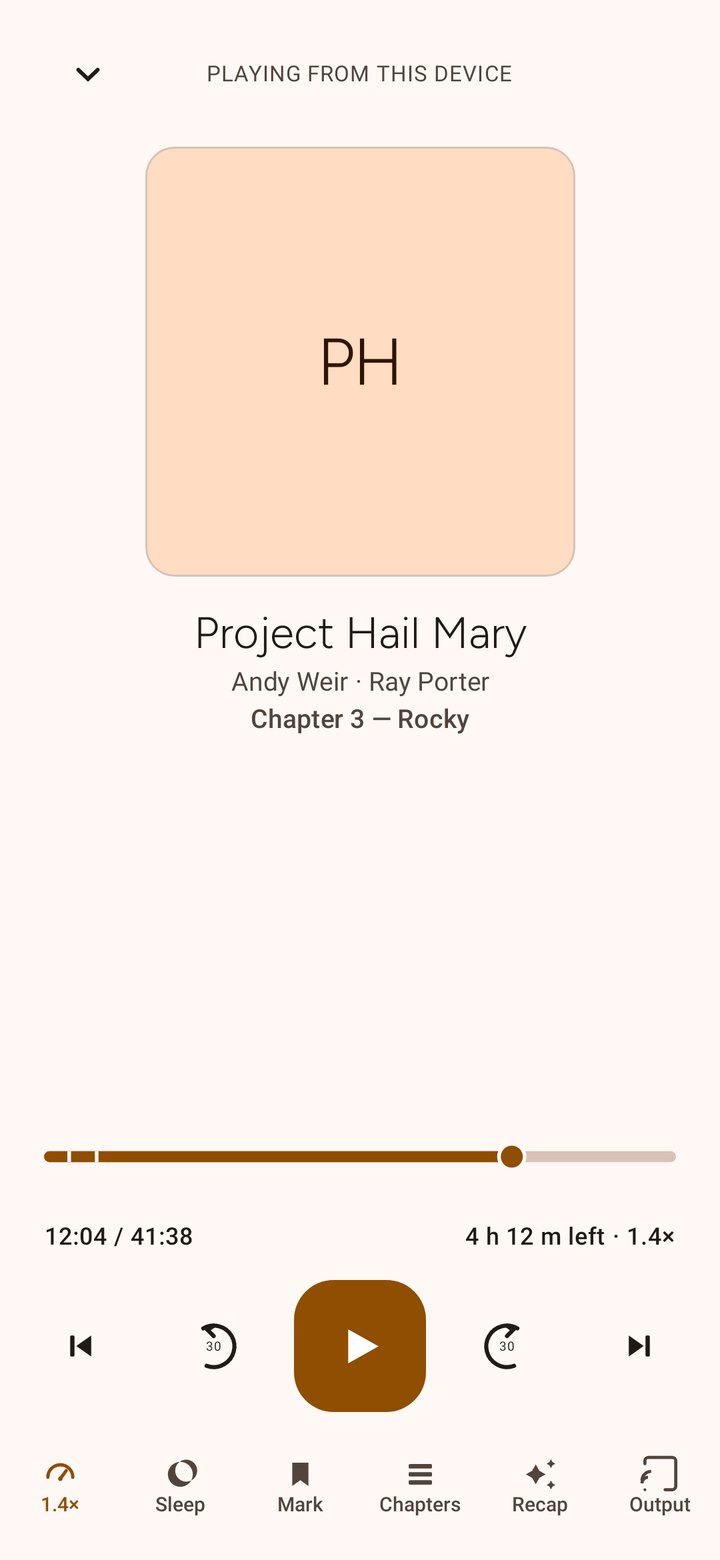
No login screen, no hosted service, no analytics script and no remote listening history. Your books stay with you.
The app reads your chosen folder without changing anything in it, takes what details it can, and keeps any corrections inside the app.
Android Auto gets its own layout, built around the book you were already listening to, with voice search that stays quiet when it is unsure.
Progress is saved on your phone and kept per recording, because 3:42:10 in one narrator's version is a different moment in another.
Most players treat the dashboard as a remote control. vbreader treats it as the hardest screen in the product. The useful answer is not a giant alphabetical list, it is the book you were already listening to.
The screen beside this is the phone, not the dashboard. The car screen is built from the same rule of putting your current book first, and we would rather show you a real phone render than a mockup dressed up as a head unit.
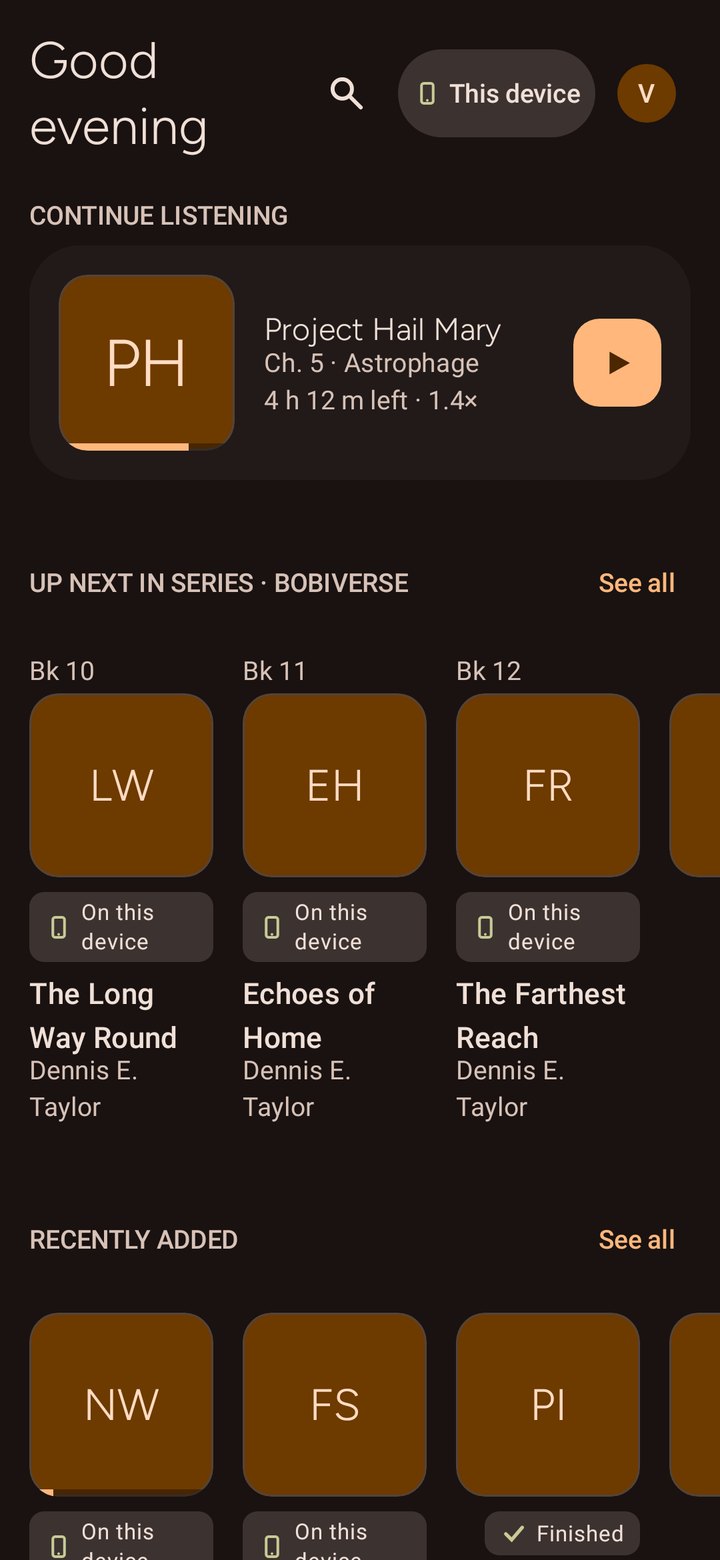
Say a title from the wheel and the right book starts. The part nobody else gets right is what happens when the request is ambiguous: most players pick something and hope. Starting the wrong book at 70 mph is not a small annoyance, it is a thing you have to fix while driving.
Play my bookPicks up exactly where you stopped. The one worth teaching first.
Play Project Hail MaryBy title.
Play Brandon SandersonBy author, when you know who but not which.
Play DuneBy series, and it continues from the right book.
Play Ray PorterBy narrator.
Mis-hearings are normal, because the car does the transcribing. Ask for
Sale Mary
and you still get Project Hail Mary. Ask for something we cannot place
with confidence, and your current book simply keeps playing.
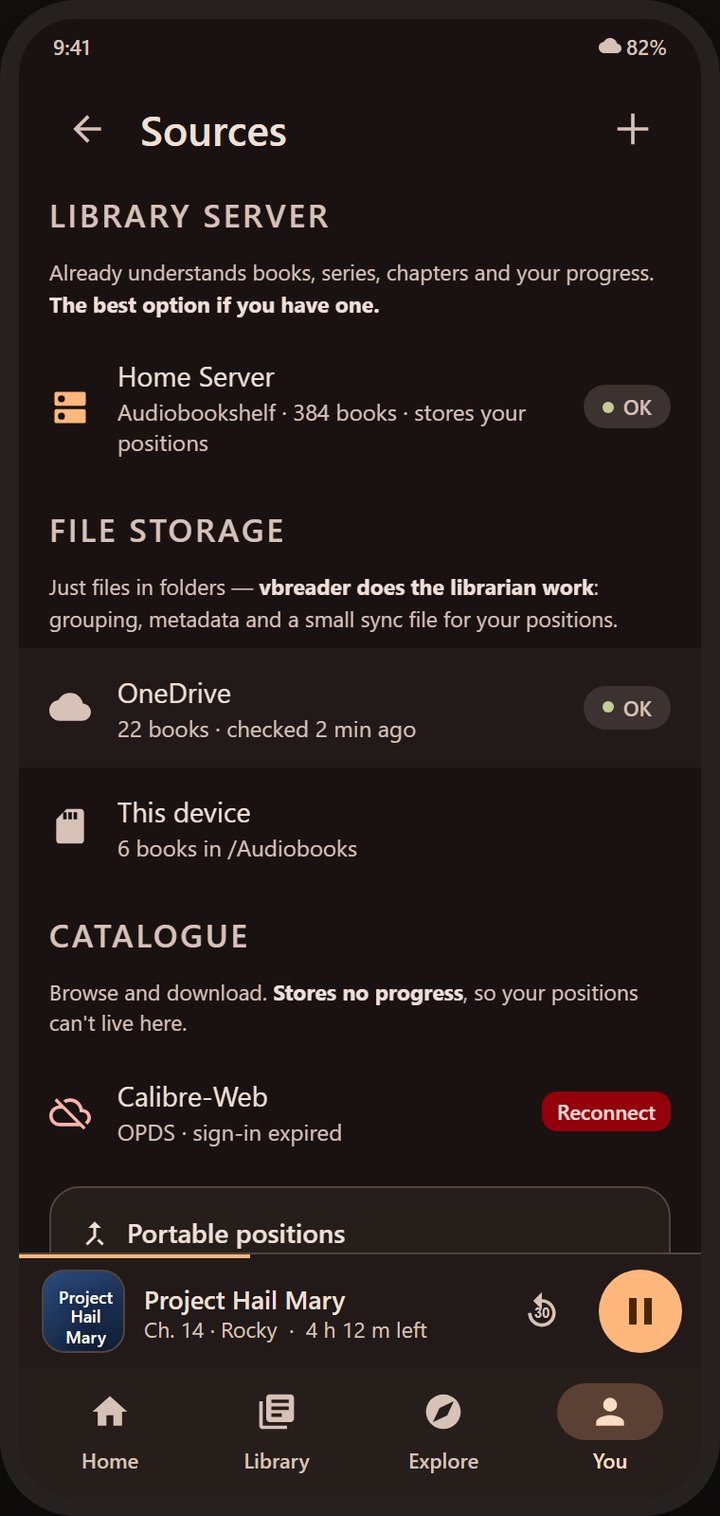
Local folders come first because they are the simplest honest path: your files, on your device, playable offline. After launch, vbreader will add the other places audiobook people already keep books.
Audiobookshelf is the best option if you run it, because it already understands books, series, chapters and progress. OPDS is for catalogues. Cloud drives are for people who keep files in folders and do not want a server just to press play.
The important point stays the same: vbreader should connect to services you already chose. It should not turn into another account system just to sync one timestamp.
Because vbreader will not run a server for your listening history, your position has to live somewhere you control. That is not a limitation to apologise for. It is the best part of the design.
The coming Portable Positions model will put progress next to your books, in a format you can open. No account, no lock-in, and no special cloud. We will write a folder, then whatever you already trust can keep it in step.
Or do not use it at all. If you listen on one phone, positions can stay there. If your server already stores progress, vbreader should not invent a second, competing record of where you are and call that a feature.
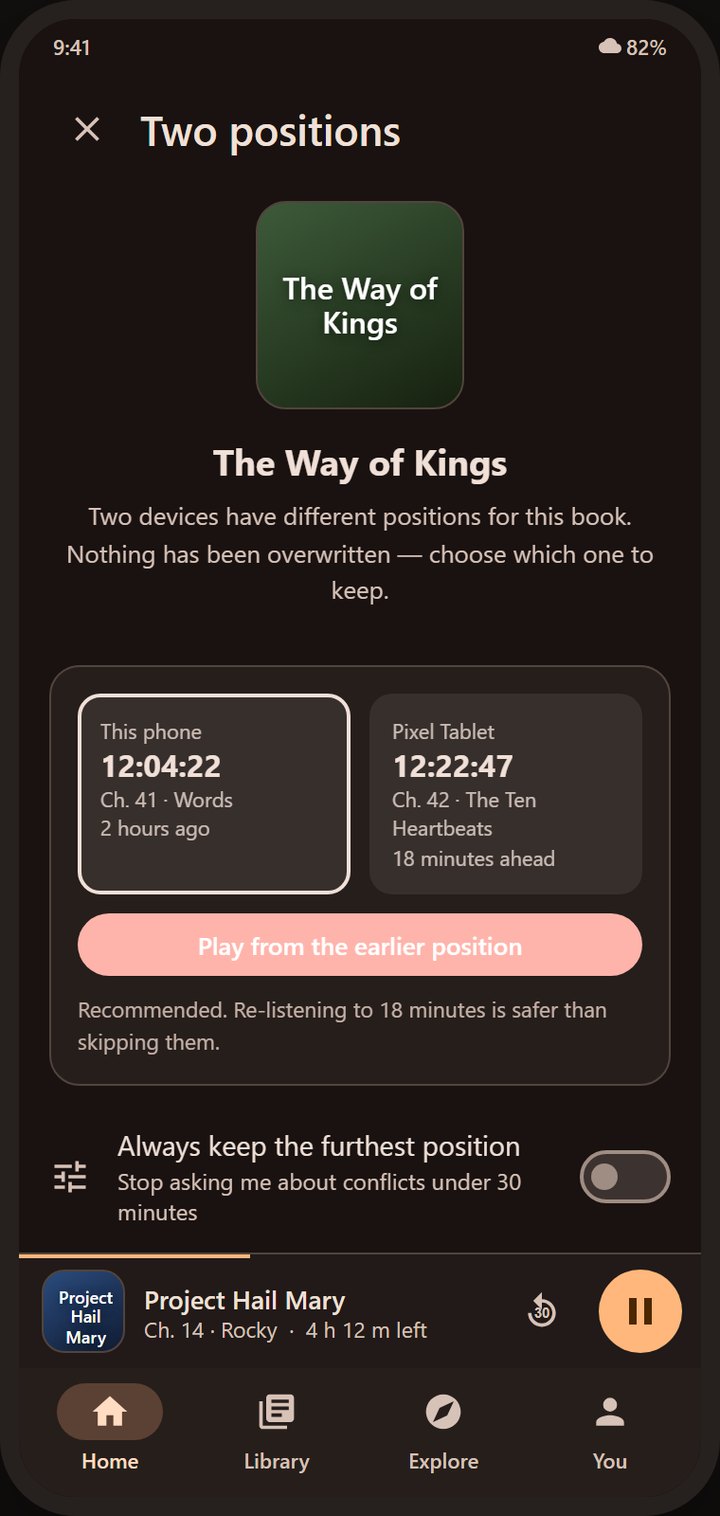
Most sync systems simply keep whichever device wrote last, and silently throw away forty minutes of listening. The planned rule is to check the other side first, notice when the two disagree, and show you the choice instead of pretending nothing happened.
“Play from earlier” stays the safe default, because re-listening to eighteen minutes costs a minute of your time. Skipping them costs the plot.
The honest edge stays visible too: two devices playing the same book at the same moment is the hard case for any sync system without a central lock. The app should name that boundary, not bury it under a cheerful green pill.
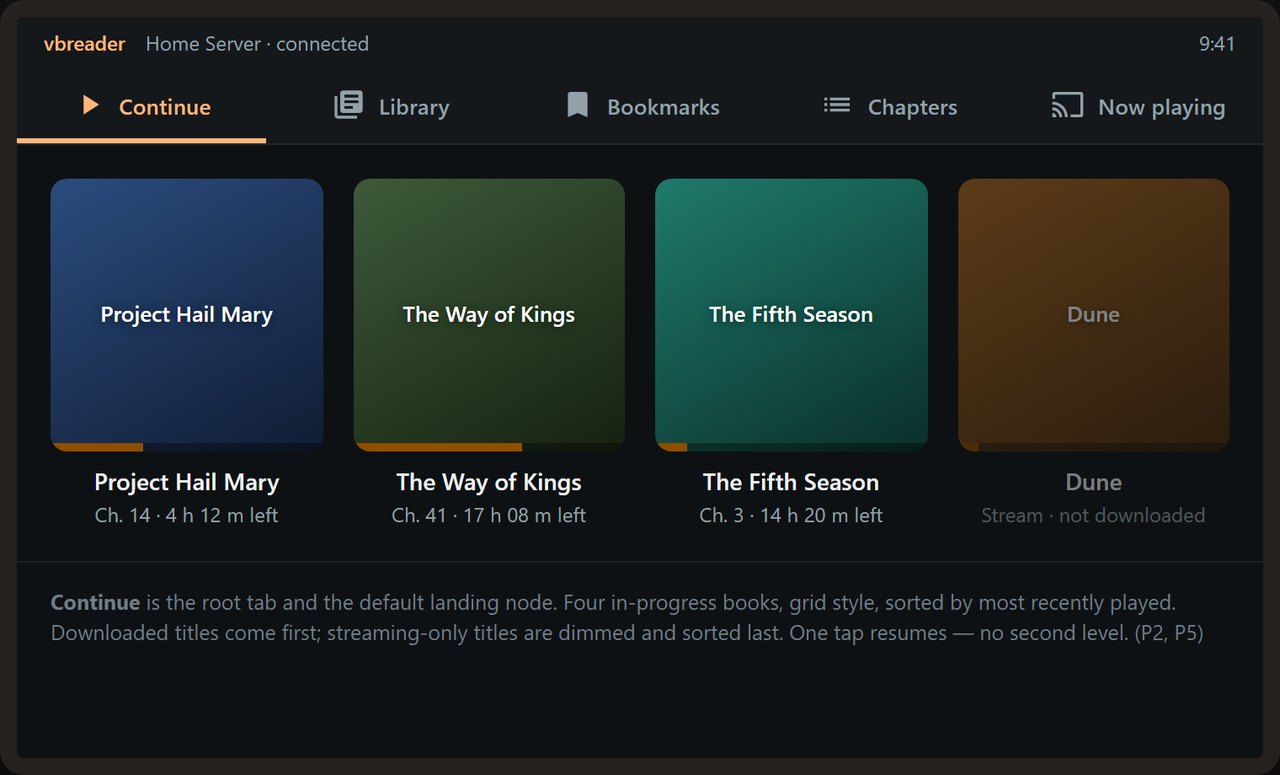
Downloads will make the car experience predictable before the dead zone starts. The app could fetch the next book in a series ahead of a long drive, while a storage limit keeps the phone from becoming a junk drawer.
Clearing space has to be cautious. It can remove finished books it can download again, but it must not touch a local file that belongs to you, and it must never discard a book with progress that has not safely landed elsewhere.
In the car, unavailable titles should be demoted before you tap them. The best offline state is the one you never have to think about at 70 mph.
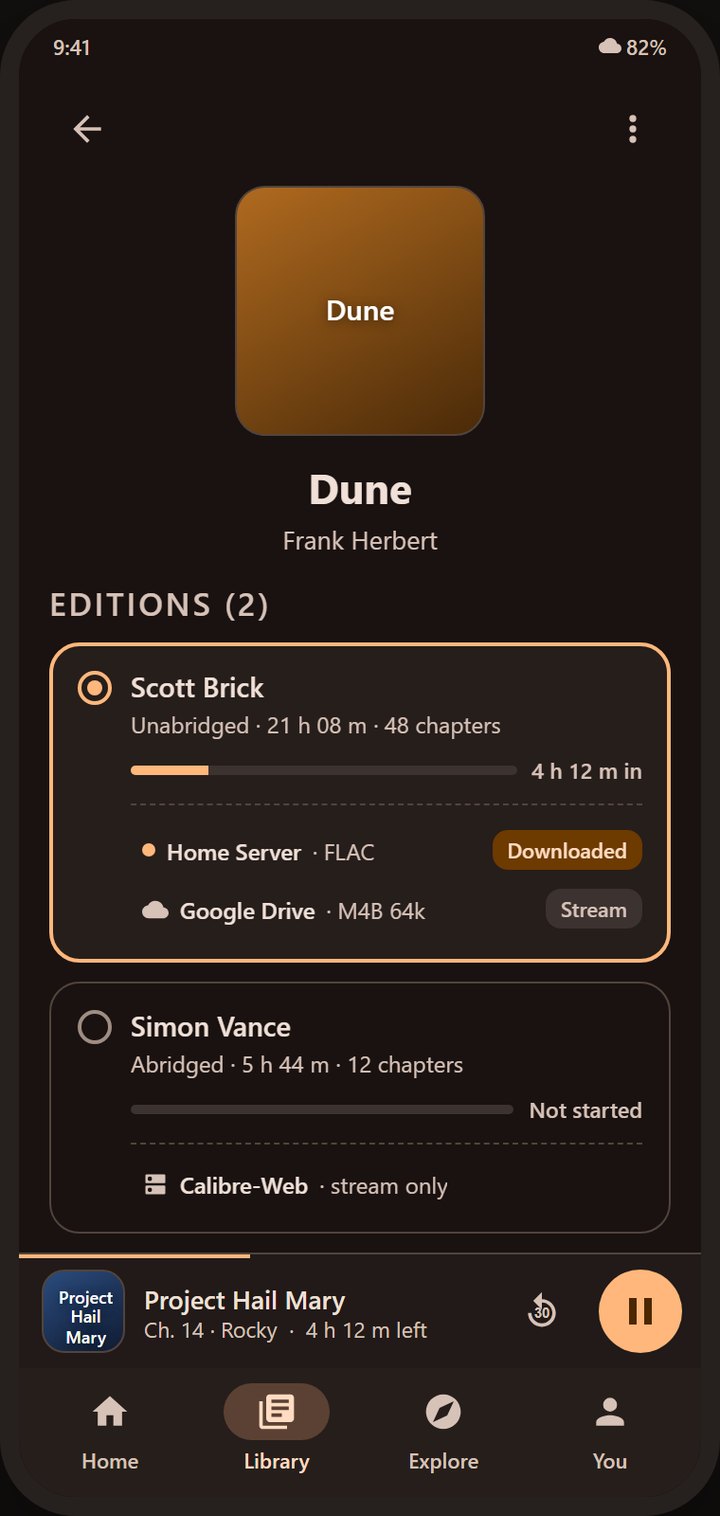
Two narrators. Abridged and unabridged. A publisher intro on one copy and not the other. Timestamp 3:42:10 means completely different things in each.
The editions screen will make that visible. Every recording keeps its own position, bookmarks and chapters. Two sources of the same recording can safely share one place. Two recordings never pretend to be interchangeable.
Switching between them can offer an explicit, clearly approximate transfer that lands slightly early. Slightly early is honest. Confidently wrong is how you lose the plot.
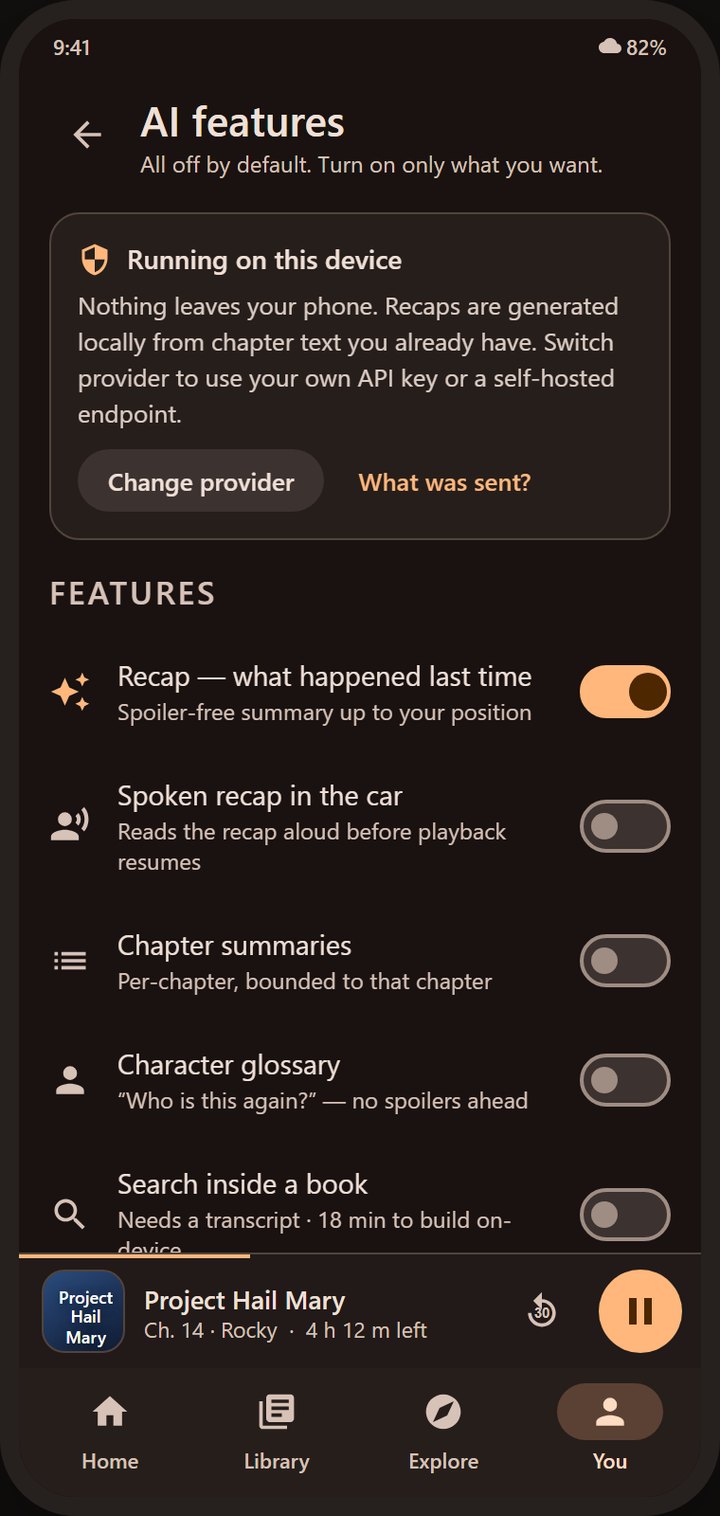
The useful version is not a sparkle sticker on the home page. It is a set of specific tools, each with its own switch, all off by default.
The flagship is “What happened last time”: a recap bounded to your exact position, never referencing a sentence you have not heard. In the car, it could be read aloud before playback resumes, when that is something you explicitly chose.
On-device first matters. So does cost. If an operation needs a paid model or your own key, the app should say that before it spends anything, and generated text should always be labelled as generated.
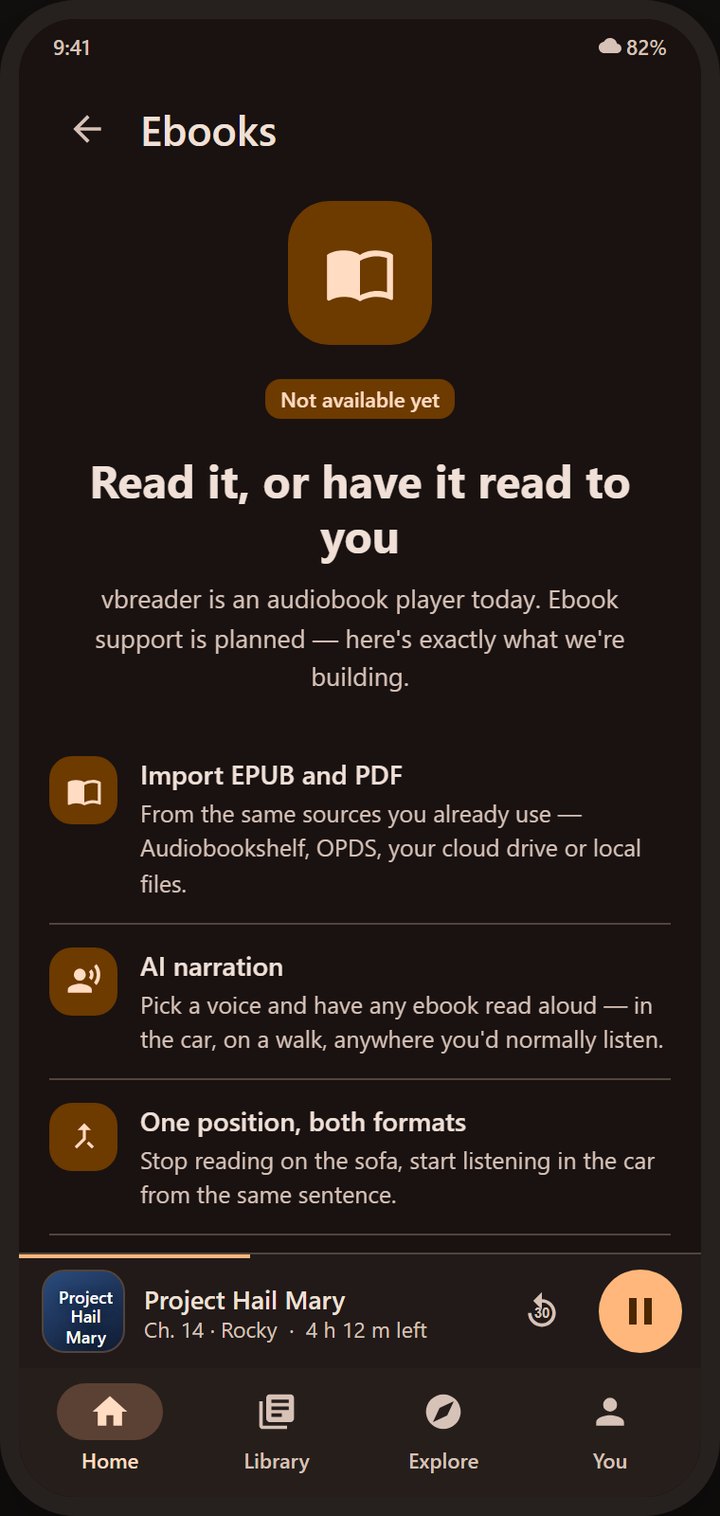
Ebooks are part of the product direction because the name is vbreader, not vbaudio. The hook is not a second app. It is one place in the book, whether you are reading on the sofa or listening in the car.
Import EPUB and PDF. Pick a voice. Keep one position between formats. Stop reading at home, then start listening from the same sentence when you leave.
Until that exists, the app should say it is not available. A clear promise beats a greyed-out menu pretending to be a feature.
Local folders, a real Android Auto app, and a position that is exactly where you left it. No sign-up, no account, and nothing to configure.